SEO Content for AI Citations: 9 Strategies for 2026
 Paul VengeonsCo-Founder & SEO Consultant
In short
Only 38% of AI Overview citations come from Google's top 10, so ranking alone no longer gets you quoted. Write one strong page per topic: open each section with a one-sentence answer, back claims with specific numbers and named sources, turn comparisons into tables, show visible dates, and check every month whether AI actually cites you.
Want to know whether AI assistants cite your site? Run a GEO analysis with ChatSEO.
Summarize this blog post with:
Writing SEO content used to come down to one question: will Google rank this? Not anymore. ChatGPT and Google's AI Overviews now read your pages too, and they get to decide whether to quote you in their answers. Worse, they often skip right past the pages Google puts on top.
And you don't have to pick one. Write a page right, and it can get quoted by AI and keep its Google spot at once. That is the whole point of this guide, plus the 9 strategies that matter most. And if you draft with AI first, a few solid ChatGPT SEO prompts make it faster.
What AI Citations Reward That Rankings Don't
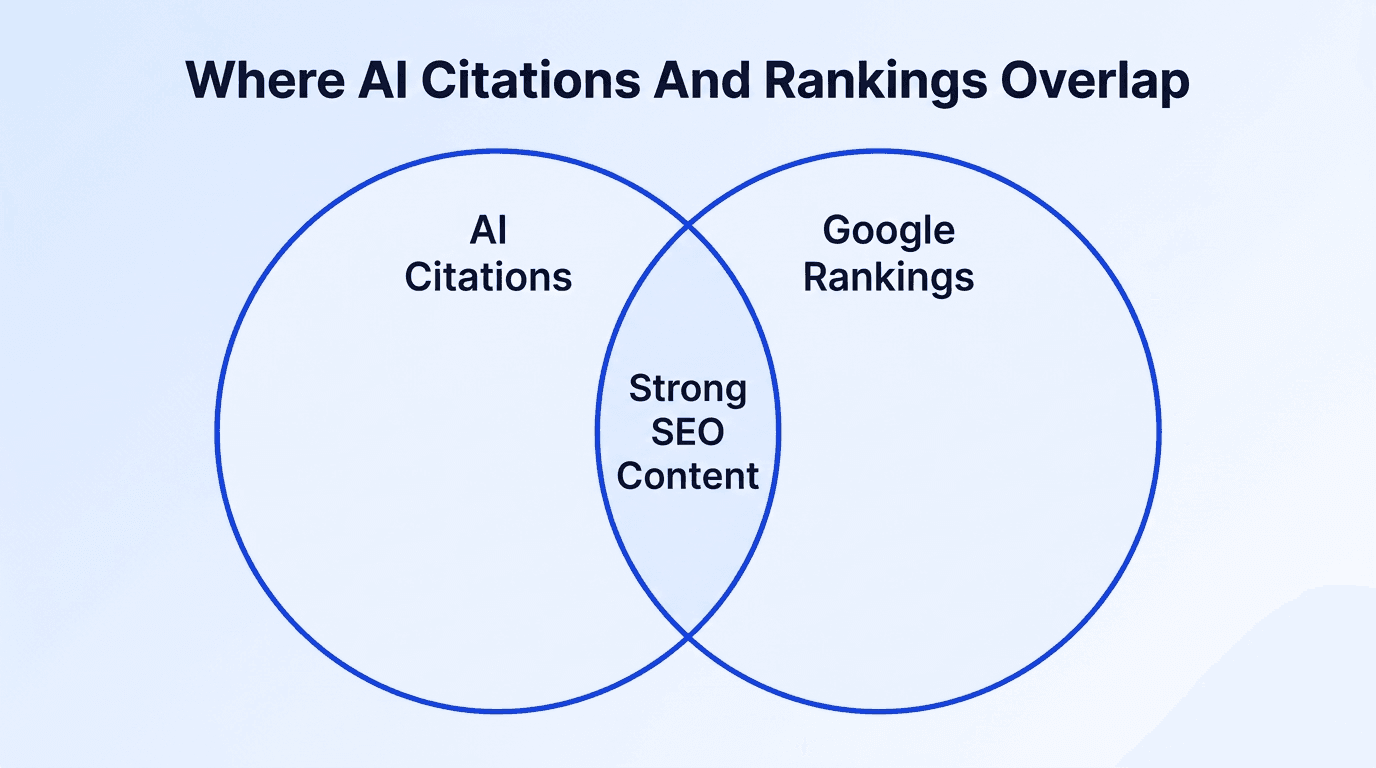
AI engines don't rank pages the way Google does. They chop them up and build answers out of the best bits. And those bits don't always come from whoever is at the top.
How AI Engines Decide What To Cite
Ask ChatGPT a question, and it doesn't read your page front to back. It goes looking for the one line that directly answers the question and credits whoever said it clearest. An AI Overview works the same way. It is less about which page ranks and more about which sentence is the cleanest answer right there.
And they all have their quirks. Perplexity shows its sources out in the open. An AI Overview blends a few into one tidy paragraph. ChatGPT goes by whatever it already trusts about your brand. Different surfaces, same question underneath: is your page the clearest answer here?
None of this is really about your Google rank, either. A 2026 Ahrefs study of 4 million AI Overview citations found only 38% came from pages in Google's top 10. Ranking still helps. It just doesn't get you quoted on its own anymore.
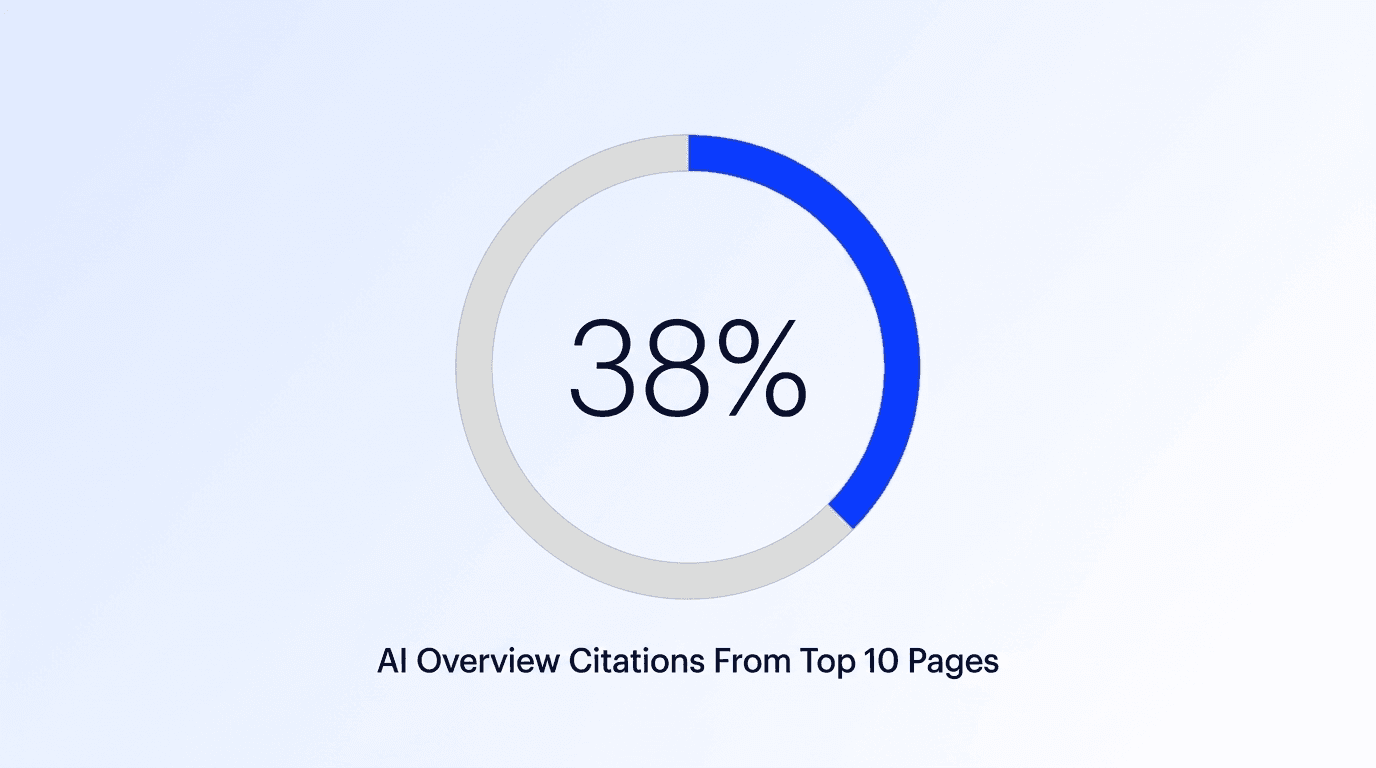
What that number really says is a little uncomfortable. You can rank number one and still be nowhere in the AI answer printed right above your own link. Getting cited is its own job now, not a freebie that tags along with a good ranking.
People call this generative engine optimization, and there is already a pile of GEO and SEO tools promising to track it for you. But the real work isn't in the tools. It is in how you write the SEO content itself.
Where Those Signals Already Overlap With Google Search Results
Okay, the good news. Nearly everything that gets you quoted by AI is just good SEO content you would want to write anyway. Clear answers. Real proof. Honest sources, plus writing people actually read to the end. Google has rewarded all of that for years, so chasing citations doesn't mean ruining your search engine results page (SERP) rankings.
The easiest way to see it is to picture two visitors on the same page: a person skimming for the gist and a machine pulling out a section to quote. Make one of them happy and, 9 times out of 10, you have made the other happy too.
| On The Page | What A Human Reader Takes | What An AI Engine Takes |
|---|---|---|
| A heading | A label to scan past | A question to match a query |
| A paragraph | A quick skim | A standalone chunk to quote |
| A number | Proof you did the work | A citable fact to attribute |
| A link out | Somewhere to learn more | A trust signal to weigh |
So no, you are not writing everything twice. It is the same work, aimed at one extra reader who happens to be a machine.
And honestly, that overlap keeps growing. Google keeps pulling its AI answers back into regular search. So the line between writing for people and writing for AI is basically fading away.
9 Strategies To Write SEO Content For AI Citations Without Losing Google Traffic
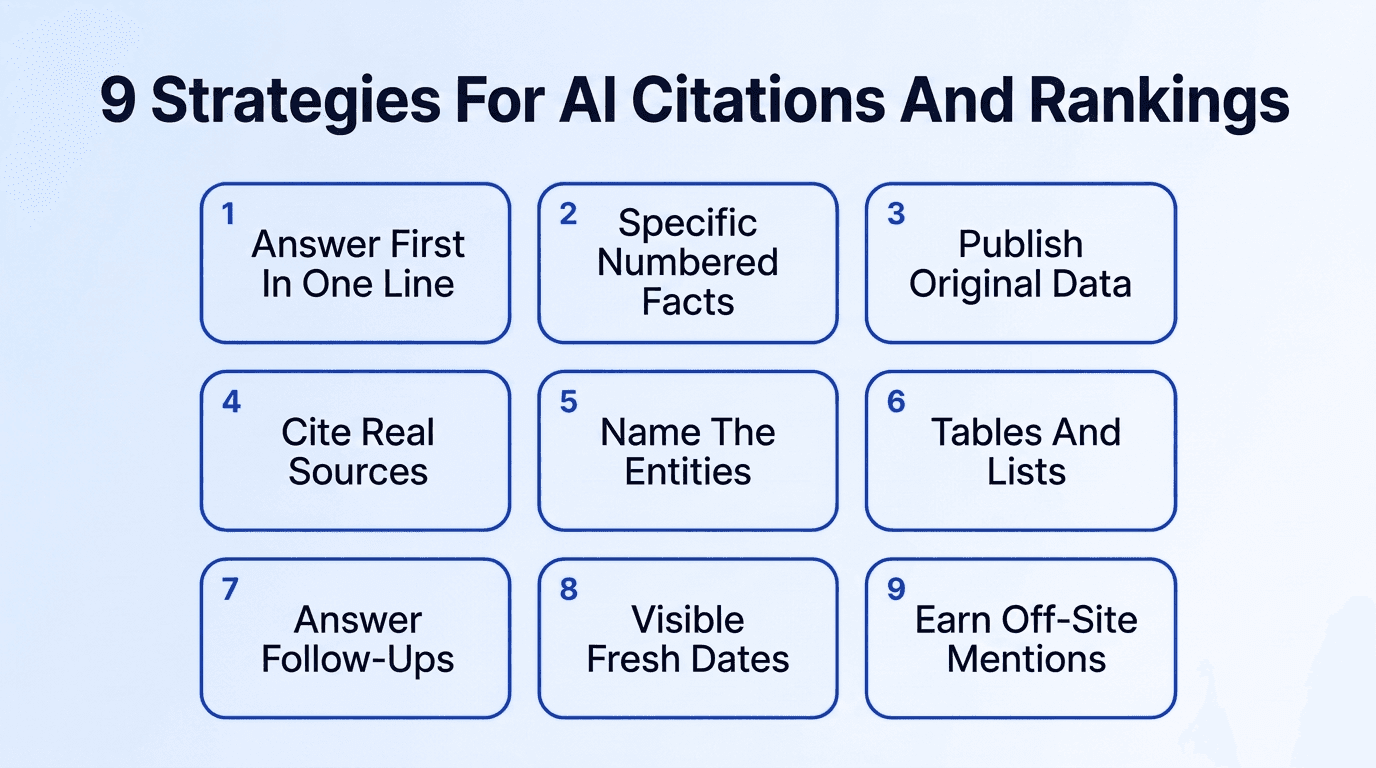
Right, the actual moves. Each one below does double work, getting you quoted by AI while protecting the organic traffic.
1. Lead Each Section With A Quotable One-Sentence Answer
AI reads in bits, not whole landing pages. It wants one clean sentence that settles the question, and if yours is hidden four paragraphs down, it just takes someone else's. People skim the exact same way, and Google has been handing out featured snippets for this move for years.
There is a quiet bonus here too. If you can't say the answer in one clear line, that is usually a sign you haven't figured out the idea yet. And the whole section wanders because of it.
- Open every section with a single sentence that fully answers its heading
- Keep that answer under 30 words so a model lifts it whole
- Push the detail and the caveats into the paragraphs right after it
- Write content so it still makes full sense pulled out of context
2. Replace Vague Claims With Specific, Numbered Facts
AI won't touch mush. Write "optimized content marketing can really help sales," and you have given the engine nothing it can safely repeat. So it quotes the competitor who dropped an actual figure instead. Specific and checkable lines are more trustworthy to the AI and the reader both. And real numbers are what other people link to.
Vague writing costs you twice. An engine has no reason to pick your page when everyone in your niche says the same soft thing. So it goes with whoever sounds surest. Being specific is how you win that call.
- Swap soft words like many or often for an actual figure or date
- Quote the exact figure instead of rounding it down into something vague
- Lead with the hard number instead of the sentence that softens it
- Turn complex benefits into simple before-and-after readers can check
3. Publish Something Only You Have
There is one card an AI engine simply can't play. It can't invent a number it has never seen. It will happily remix every blog post ever written on your primary keyword, but it can't fake data you gathered yourself. And that makes original data the rarest thing in SEO content writing. Rare is what gets quoted, while recycled copy just gets summarized and skipped.
And the squeeze is getting tighter. Semrush looked at 400 target keywords and found Google was already showing an AI Overview on 88% of them by August 2026, up from 46% a year before. When the engine answers almost every search itself, your own user behavior data is the one thing it can't borrow from a rival.
And you have more of it than you'd guess, from the performance data in Google Search Console to the questions your support team fields all day.
- Run a reader poll or small benchmark test and publish the raw results table
- Pull three numbers from your Google Analytics that no competitor can report
- Screenshot a real before-and-after result from your own account or a client’s
- Quote a surprising stat from your support tickets with the exact frequency
4. Cite Reputable Sources Right In The Text
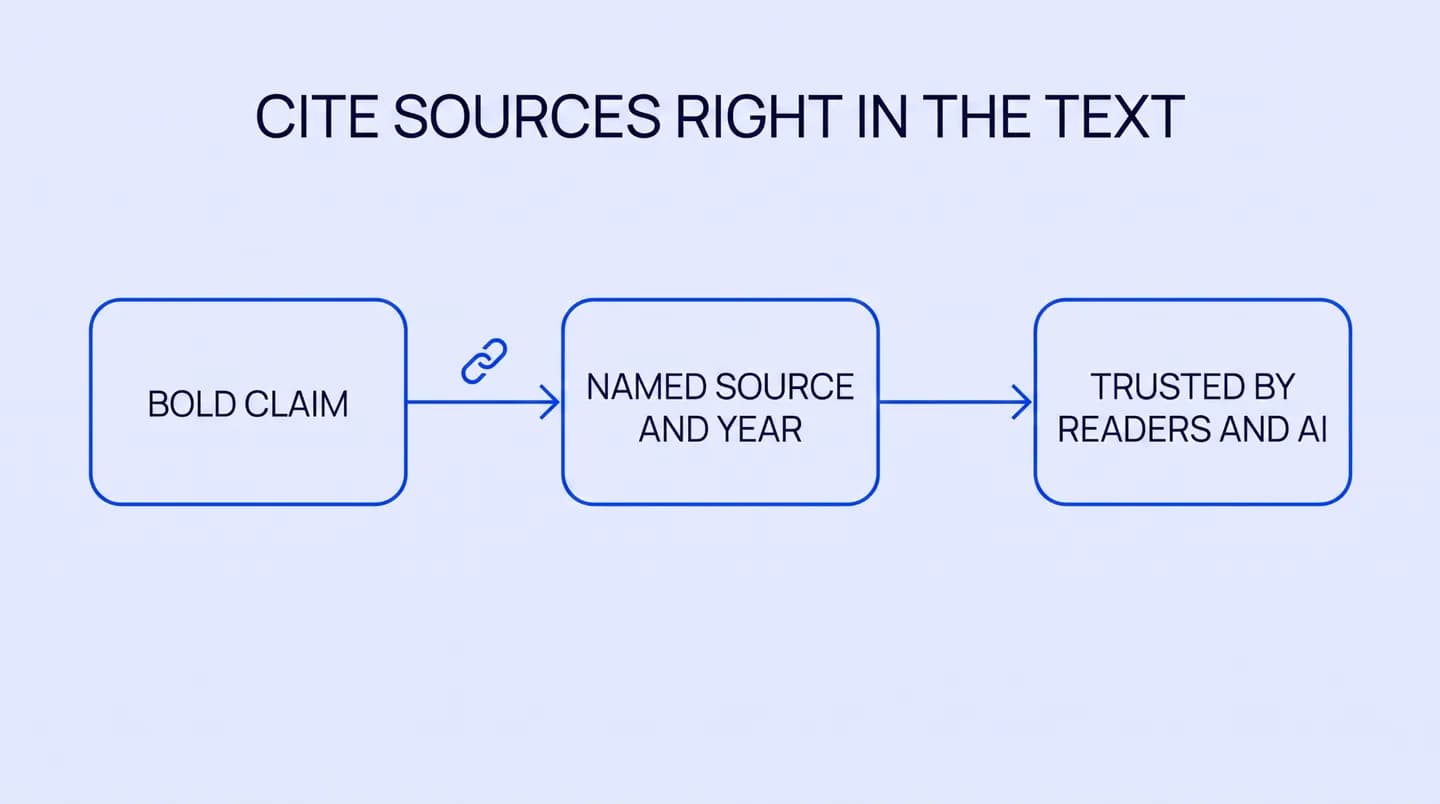
A bare claim makes an AI jumpy. You give the engine a little trust signal it can repeat when you add a figure to a named source right in the sentence. Google has rewarded that credibility for years. So the citation that calms a doubtful reader also tells a model your SEO content is safe to quote.
- Link every borrowed statistic to the original study, not a blog that re-quoted it
- Name the source and its year inside the sentence before the link itself
- Prefer primary research and government data over roundup posts and press releases
- Check each cited page still loads and still shows the figure you quoted
Results from a  ChatSEO customer
From 0 to 225 Google clicks a day
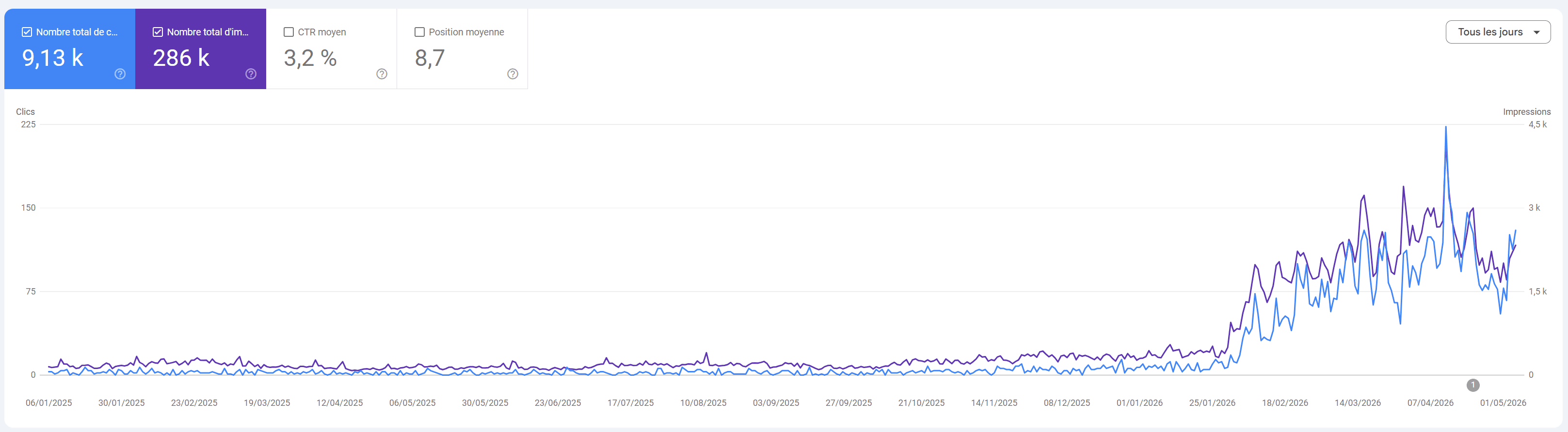
“From 0 to 225 clicks a day in a few months.”
Sébastien BRD · Founder, DLRP Express
5. Name The Tools, Brands, And People Explicitly
The engine has no idea what to do with your words if they are too vague. Say "a popular platform," and a model has no entity to match against a search query.
But it knows exactly what your page is about when you name the actual product. Being this plain also helps search engines understand which topics you cover. For images, descriptive alt text gives search engines and assistive technology useful context about what they show.
Everywhere you'd reach for a category or a type, drop in the real name instead. It is more credible to a person, and it gives Google and other search engines the exact entities they need to quote you on the long-tail keywords those foggy pages never rank for.
- Replace generic nouns like platform or solution with the product's actual brand name
- Name the specific people and companies that an AI answer would plausibly cite
- Spell every acronym out once so engines link it to the full term
- Attach the exact model number or release year whenever that specific detail exists
6. Turn Comparisons And Steps Into Tables And Lists
A machine can only pick what it can cleanly see. Hide a comparison inside flowing paragraphs, and an engine has to guess at it. Lay the same facts out in a table, and you have given it a ready-made block to quote, in a content format that it reads without effort.
People skim structured content faster too, so they stay around longer. Plus, it helps screen readers make sense of the page structure.
Getting one page structured well is easy enough. The trouble starts when you are running dozens or hundreds of them. Structure slips across a big library where one page uses a clean table, and the other related pages hide the same facts in paragraphs.
For a team publishing internal knowledge bases on something like SharePoint, that inconsistency is constant. It makes the whole site harder for people and engines to parse the same way twice.
One practical fix is to stop rebuilding structure by hand and work from a set of SharePoint templates by ShortPoint instead. A library like that gives you drop-in blocks such as a hero or a comparison section that already carry a consistent layout.
Someone with no code skills can assemble a properly structured page from the same components everyone uses, so page forty parses like page one. The structure stops depending on whoever happened to build each page.
- Convert any side-by-side comparison into a table with one clear header row
- Break any multi-step process into numbered steps a model can reuse verbatim
- Keep each table row and each list item to a single tight idea
- Add a plain-text summary sentence right above every table for engines to pull
7. Answer The Obvious Follow-Up Questions To Meet Search Intent
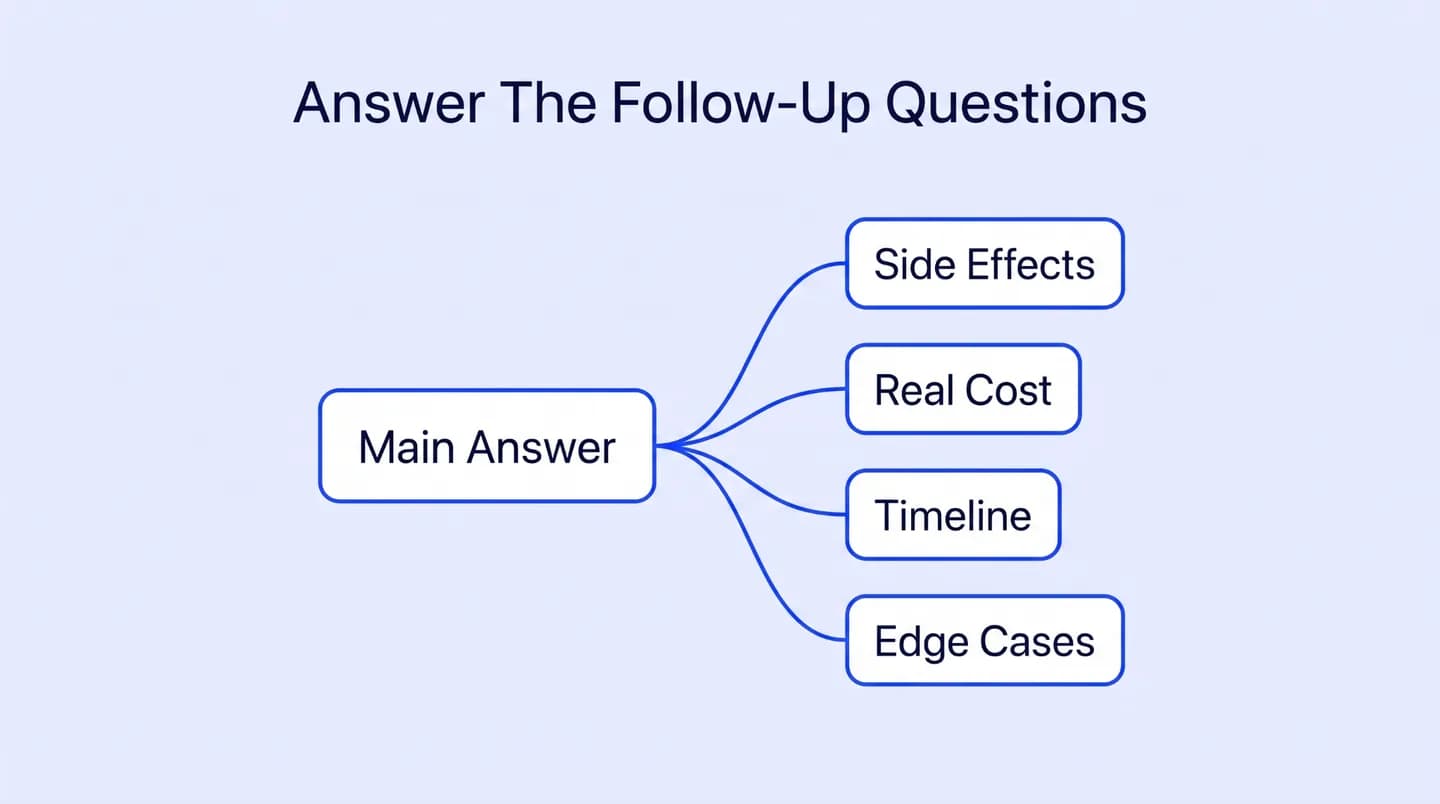
One answer never closes the loop. A whole queue of follow-ups lines up the moment a reader understands your main point. Stop at the headline, and they leave to find the rest somewhere else.
AI behaves the same way, chasing the page that matches the full user intent over the one that nails only the opening line. And it becomes all the more important if you are targeting purchase-related queries. About 75% of people in the US shop online at least once a month, so there are plenty of opportunities to reach them while they are researching a product or service.
Content that answers their follow-up questions can help you meet that intent instead of leaving them to search elsewhere for the details they need.
Every one of those answers maps to a real search somebody runs right after the first one, which is how a single page gets citations across a whole cluster of long-tail questions.
Analyzing search intent and figuring out which follow-ups to cover is its own little job, and question-research tools are made for exactly that. Handle the awkward ones your rivals tiptoe around, and you own the queries they left wide open.
- List the five questions a reader naturally asks right after your main answer
- Give each follow-up its own short H3 and a direct one-line answer. Add internal links to other pages that discuss those answers in detail
- Cover the edge cases and the awkward objections your competitors always skip over
- Pull real follow-up queries from Google Search Console and your own site search
8. Keep It Current With Visible Dates
Both your readers and the engines take age as a quality signal. Someone who sees a 2023 date on a stats post half-doubts it before the first sentence. And AI inclines toward sources that look looked-after. An outdated page doesn't just slide down the organic search rankings; it stops getting quoted the second a fresher answer shows up.
Keeping one page current is easy. Keeping a whole library current is the real headache, because you can't refresh what you have lost track of. Once you are past a few dozen evergreen posts, nobody remembers which stat is from 2023 or which guide slipped out of date last quarter.
That is an operations problem rather than a writing one. A work-management board like monday.com is what handles it. You give every post its own row with a last-reviewed date and a refresh cadence. Automations then flag anything past its window, so an ageing page shows up before a reader or an engine notices it first.
9. Get Named On The Third-Party Sites AI Already Trusts
AI engines read way more than your own site. They weigh up what the rest of the web says about you. And they lean hardest on a handful of places they already trust, like Reddit and the big industry publications. Turn up there enough, and you get pulled into answers even when your own page isn't the one quoted.
- Earn genuine mentions in the subreddits and industry forums your target audience reads
- Keep your brand name and your key facts identical across every external profile
- Pitch your original data to writers and journalists who properly cite their sources
- Get listed in the industry roundups and comparison posts that engines quote often
3 SEO Content Strategy Mistakes That Cost You Both AI Citations And Search Engine Rankings At Once

A handful of habits manage to wreck your AI citations and your Google rankings in one go. They nearly always come from treating the two like separate games when they are really the same one.
1. Writing For Robots Until Humans Bounce
This is the one where you optimize so hard for machines that actual humans can't stand the page. Every sentence gets hacked into a stubby fragment. The voice drains out. The whole thing reads like a spec sheet nobody wanted. A real person skims it and bounces in seconds. That bounce rate then drags the very rankings you were chasing back down.
How to Fix: Write for the person first and let the machine come along for the ride. Read every draft out loud. Anywhere you sound like a robot, say it again the way a human would. Keep the structure where it genuinely helps, but never at the cost of a voice someone wants to read.
2. Spinning Up Separate "AI Pages" Instead Of One Strong Page
Some teams get spooked and create content for a second set of flimsy pages aimed only at AI, running in parallel to the real ones. It backfires twice over. The thin pages are too shallow to get cited by anyone.
And they fight your genuine pages for the same primary and secondary keywords. So you split your own authority and leave Google staring at near-duplicate content it ends up ignoring.
How to Fix: Create a clear content plan that sorts everything out early. Put everything into one genuinely strong page per topic instead. Map your topics before you write so each one owns a single URL with nothing overlapping. Then make that one page deep enough to please a reader and a model at the same time.
3. Never Checking Whether You Actually Get Cited
You keep publishing and assume it is all working. You never once check whether AI engines are quoting you or your rivals. That blind spot is pricier than it used to be. People click a link inside an AI Overview just 1% of the time. When the citation itself is the visibility, not knowing whether you earn one means operating in the dark.
How to Fix: Track citations with the same discipline you give SEO rankings. Each month, run your key questions through ChatGPT and Google's AI Overviews and note who gets quoted. Tools that monitor AI citations can do the checking for you, so you spot a rival pulling ahead before it hardens into a trend.
Conclusion
Strip away the nine strategies, and the shift is dead simple. You are not creating SEO content for a search engine anymore. You are writing one strong page a person reads to the end and a machine is happy to quote. Aim for both with a single honest page, and the old fight between search engine visibility and citations just disappears.
At ChatSEO, we built our agent to run on your real site data. Connect your Search Console and CMS, and it handles the relevant keyword research, search engine optimization, and on-page writing. It even publishes to WordPress. The result is SEO content ready to rank and get cited by AI from the first draft. See how it works.
Burkhard Berger is the founder of Novum™. He helps innovative B2B companies implement modern SEO strategies to scale their organic traffic to 1,000,000+ visitors per month. Curious about what your true traffic potential is?