The 7 Best AI Visibility Tools in 2026
 Paul VengeonsCo-Founder & SEO Consultant
In short
LLMrefs gives the most coverage per dollar (500 prompts, 11 engines, $79/month), Profound the deepest tracking but only on a custom quote, Peec AI the best middle ground at $95/month. Start with a free tier or a trial, track 20 to 50 real buyer prompts, then pay.
A tracker shows the prompts you lose. ChatSEO fixes the pages that get you cited by AI assistants.
Summarize this blog post with:
Which AI visibility tool is for you?
Answer 5 questions to find your tool
Every week another AI visibility tool lands. Most show you the same three numbers: mentions, share of voice, sentiment. Then they hand you a screenshot and wish you luck.
So we did the boring part. Like our free Profound alternatives guide, we opened the live pricing pages for the seven tools that keep coming back in 2026 roundups, counted what each plan actually includes, and scored them on four criteria: tracking depth, platform coverage, pricing value, actionability. Every price below was checked at source in October 2026, in the currency the vendor publishes, with the billing period stated. Where a page refused to load, we say so instead of guessing.
Disclosure: this ranking is independent and unsponsored. It is built only from live pricing checks and published plan limits, and no vendor paid for a position. We build ChatSEO, which is why it sits outside the ranking, at the end.
⚡ In short
- Best value: LLMrefs. $79/month billed monthly, 500 prompts, 11 engines, unlimited seats. Hard to beat per dollar.
- Best tracking depth: Profound. 50 unique prompts a day on trial, up to 9 engines on Enterprise, but no published self-serve price.
- Best middle ground: Peec AI. $95/month billed monthly for Starter (50 prompts, 3 models), 15% off on annual.
- Best bolt-on: Semrush AI Visibility Toolkit at $99/month billed monthly if you already live in Semrush, or Ahrefs Brand Radar from $199/month billed monthly if your workflow is Ahrefs.
- Best free start: AthenaHQ. A free tier with $25 of credit covers 300 credits across 5 models before you pay $295/month.
- Verdict: take a free tier or 7 day trial first, track 20 to 50 real buyer prompts, then pay once you know which gaps you can fix.
📊 Compare the 7 tools at a glance
Read this table as a filter, not a verdict. The best ai visibility tools are the ones whose entry plan covers your real prompt list, and that is a question about volume and engines, not about demo polish. Prices are monthly unless stated.
| Tool | Best for | Entry price (USD) | AI platforms covered | Free trial |
|---|---|---|---|---|
| Profound | Deep prompt tracking for funded teams | Custom (no self-serve paid plan) | 3 on trial, up to 9 on Enterprise | 7 days, 50 prompts a day |
| Peec AI | Content teams that want clean reporting | $95/month billed monthly | 8 listed, up to 13 models on Enterprise | Not listed on the pricing page |
| Otterly.ai | Cheap monitoring for small sites | Not confirmed (pricing page returned 403) | 4 included, 3 more as paid add-ons | Not confirmed |
| Semrush AI Visibility Toolkit | Marketers already paying for Semrush | $99/month billed monthly, Base toolkit | AI Overviews, ChatGPT, Gemini, Perplexity | 7 days, plus a free plan |
| Ahrefs Brand Radar | Tying AI data to backlink and SERP data | $199/month billed monthly, standalone | ChatGPT, Perplexity, AI Overviews, Copilot, Claude | No free trial, free Ahrefs tier exists |
| AthenaHQ | Free start, then wide model coverage | $295/month billed monthly, Starter | 11 models | Free tier with $25 credit (300 credits) |
| LLMrefs | Maximum coverage per dollar | $79/month billed monthly | 11 engines | 7 days, no card required |
⭐ The scorecard: 4 criteria, 5 stars
| Tool | Tracking depth | Platform coverage | Pricing value | Actionability |
|---|---|---|---|---|
| Profound | ★★★★★ | ★★★★☆ | ★★☆☆☆ | ★★★★★ |
| Peec AI | ★★★★☆ | ★★★★☆ | ★★★★☆ | ★★★★☆ |
| Otterly.ai | ★★★☆☆ | ★★★☆☆ | ★★★☆☆ | ★★★☆☆ |
| Semrush AI Visibility Toolkit | ★★★★☆ | ★★★★☆ | ★★★★☆ | ★★★★☆ |
| Ahrefs Brand Radar | ★★★☆☆ | ★★★★☆ | ★★★☆☆ | ★★★★☆ |
| AthenaHQ | ★★★★☆ | ★★★★★ | ★★★☆☆ | ★★★★☆ |
| LLMrefs | ★★★★☆ | ★★★★★ | ★★★★★ | ★★★☆☆ |
These stars score published plan data, not lab benchmarks: prompt volume, included engines, entry price per tracked prompt, and whether the report tells you what to fix next. Otterly's pricing value is provisional because we could not read its price at source.
🏆 Profound: the deepest tracking, if you can get a quote
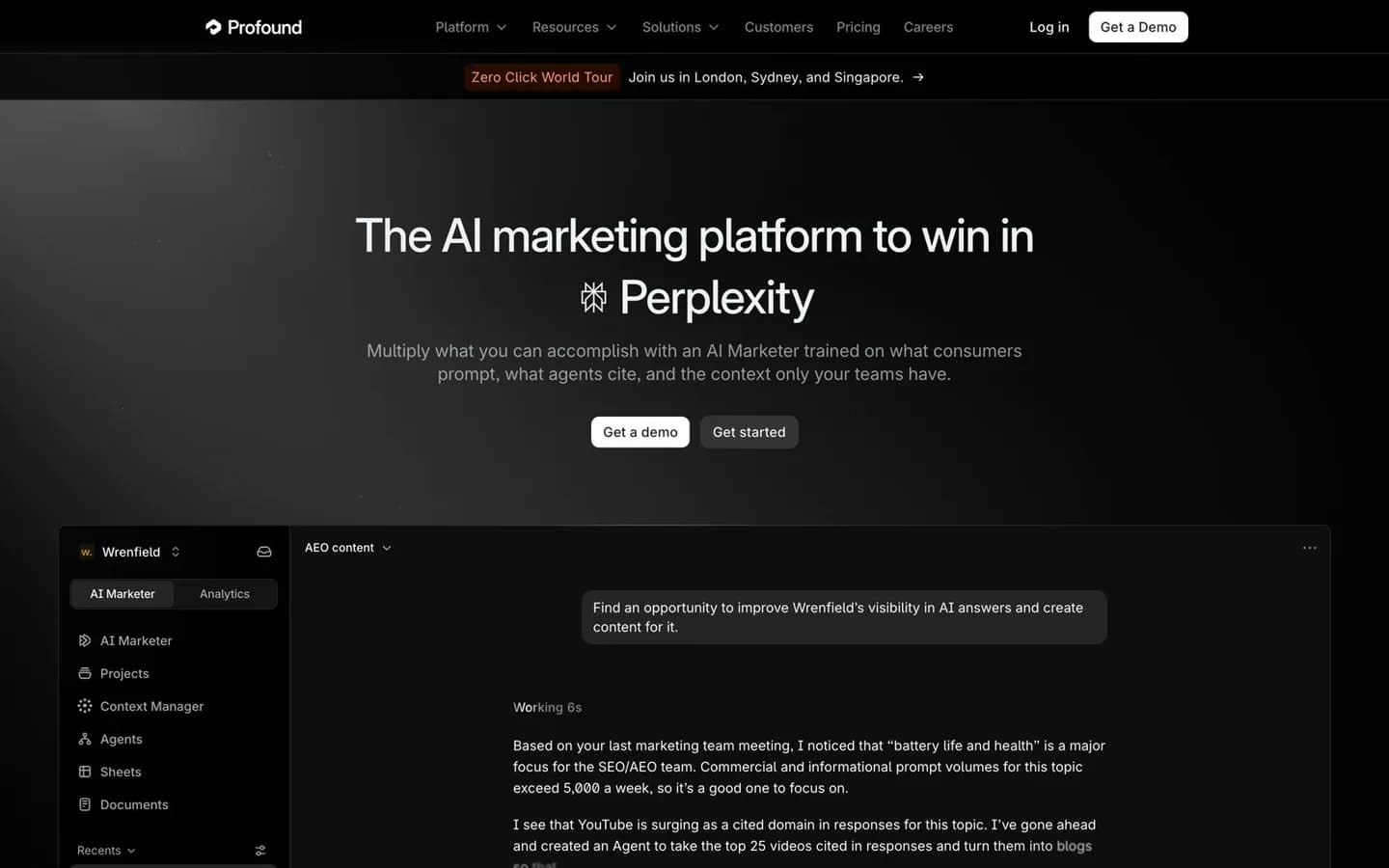
Profound is the name every roundup puts first, and the plan data explains why. It is built for prompt-level tracking rather than quick checks: the trial gives you 50 unique prompts a day for 7 days, unlimited seats, one language and region, and three engines (ChatGPT, Gemini, Google AI Overviews). The catch is what happens after day 8: Profound's pricing page lists Trial (free) and Enterprise (custom), with no self-serve paid tier and no published number. Enterprise expands to up to 9 answer engines, including Perplexity, Copilot, Claude, DeepSeek and AI Mode.
Pricing check: free 7 day trial, then custom Enterprise pricing (tryprofound.com/pricing).
Pros
- Unlimited seats even on the trial, which is rare.
- Nine engines on Enterprise, including the second-tier assistants competitors skip.
- Aggressive prompt volume at the top end.
Cons
- You cannot buy it with a card. Procurement, demo, quote.
- Trial engines are limited to three, so you cannot test broader coverage first.
- No published price means no way to benchmark cost per prompt.
Best for: in-house teams with a real budget and a long prompt list to monitor.
Who should NOT buy it: anyone who needs a self-serve checkout today, and small sites that will never track more than 50 prompts.
📊 Peec AI: the cleanest reporting for content teams
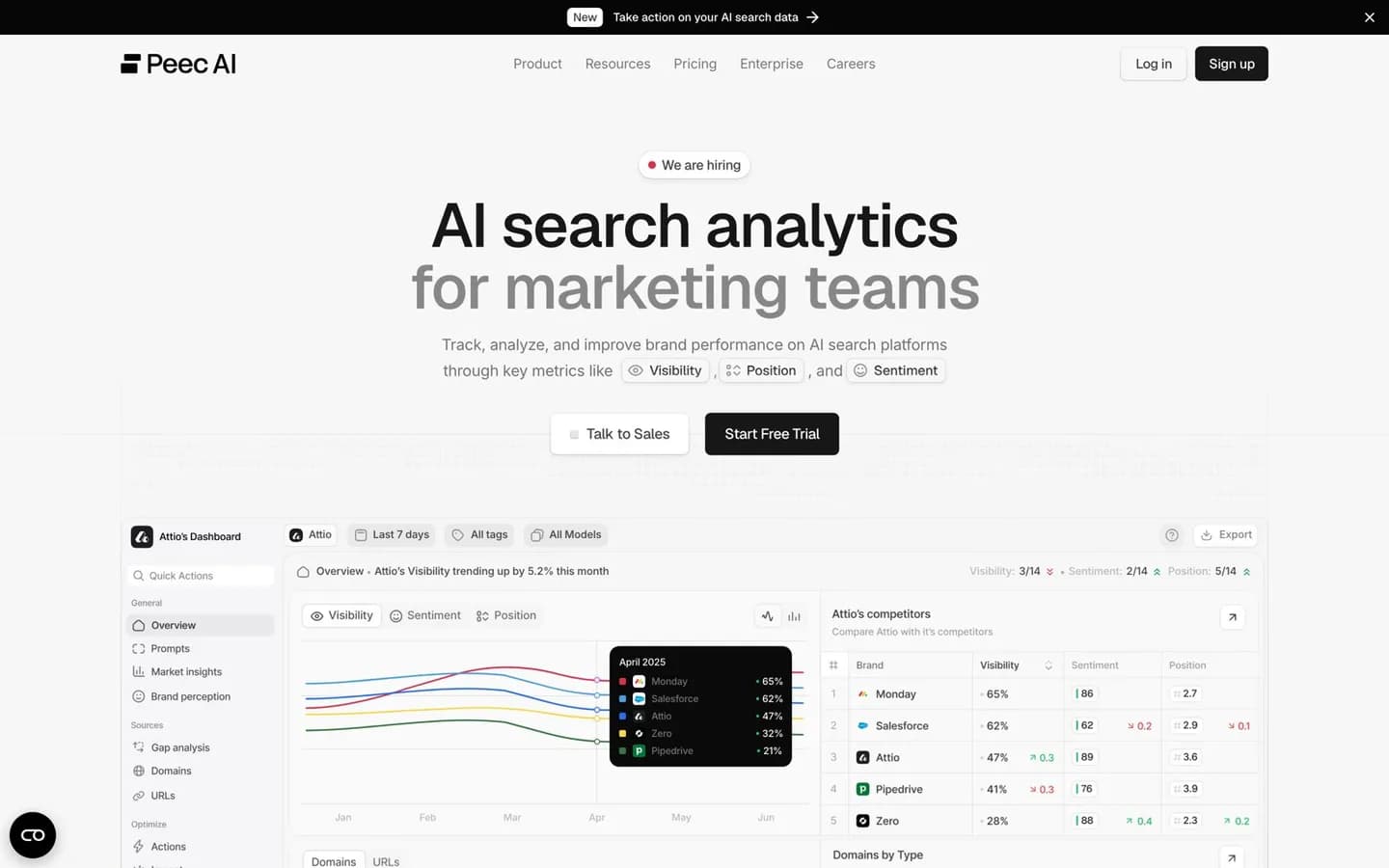
Peec AI hits the sweet spot most teams actually need: enough prompts to be useful, reporting a writer can read without a call. Starter is $95/month billed monthly for 50 prompts, 3 models, 1 project and unlimited users, and annual billing takes 15% off. Extra models are paid add-ons, so check the engine list against your plan before you commit. The published platform list runs to 8 (ChatGPT, AI Mode, AI Overviews, Copilot, Gemini, Claude, Perplexity, Naver AI), and Enterprise goes to 13 models on annual billing.
Pricing check: Starter $95/month, Pro $245/month, Advanced $495/month, billed monthly unless you take the 15% annual discount (peec.ai/pricing). Visitors in Europe see euro prices instead (€85, €205, €425).
Pros
- Unlimited users on every tier, so the whole content team can log in.
- Clear share of voice and citation views without a dashboard course.
- Predictable per-tier prompt counts.
Cons
- The price you see depends on your region: dollars in the US, euros in Europe.
- Only 3 models on the entry plan, with extras as paid add-ons.
- No trial advertised on the pricing page.
Best for: content and SEO teams of 3 to 10 people who need one shared source of truth.
Who should NOT buy it: teams tracking hundreds of prompts, or anyone who needs a free trial before spending. On a zero budget, start with our free Peec AI alternatives.
🔍 Otterly.ai: the budget option we could not verify
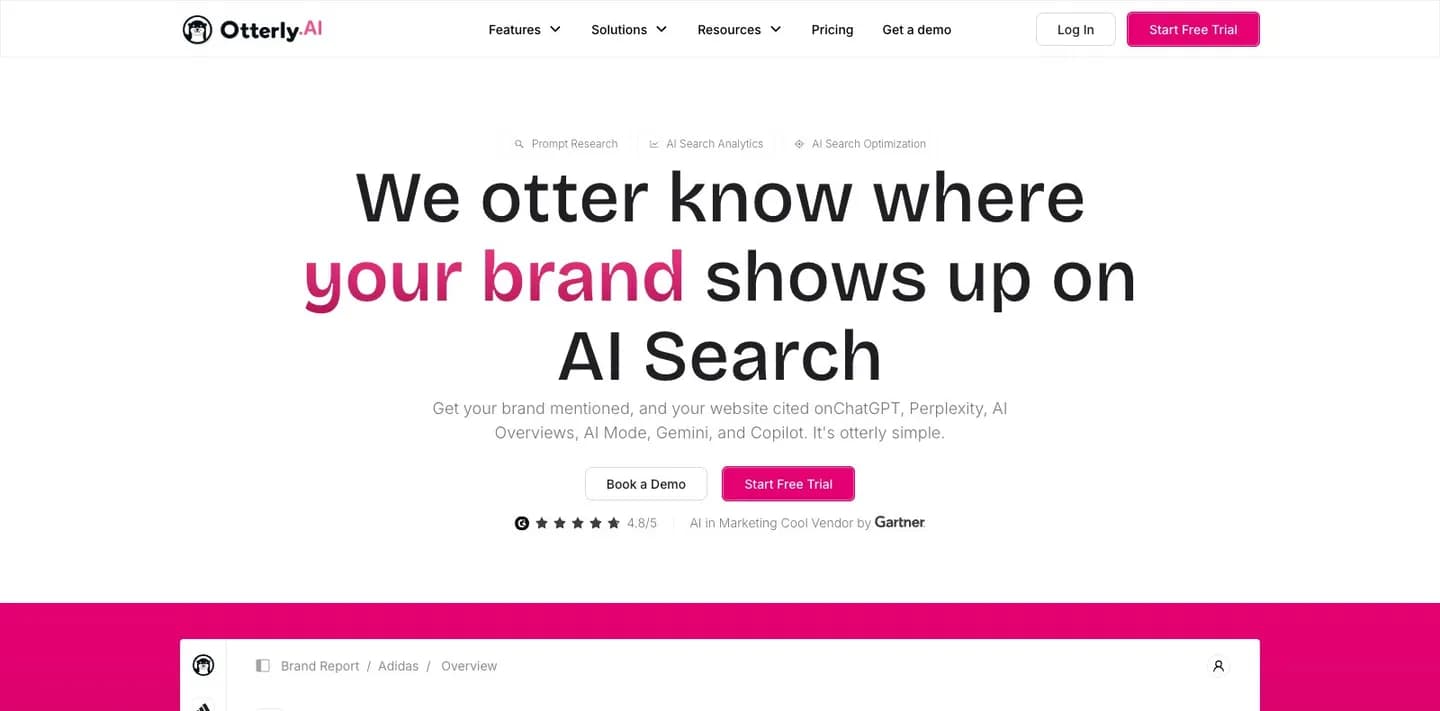
We wanted Otterly in this list because it is the cheapest name in nearly every roundup, and we are telling you exactly where the evidence stops. Otterly's pricing page returned HTTP 403 on repeated attempts, so every dollar figure you see elsewhere for Otterly comes from secondary sources, not from the vendor. What is first-party is the plan structure: its help centre documents Lite, Standard and Premium (plus custom Enterprise), with 15, 100 and 400 search prompts, on monthly or annual billing. All plans include Google AI Overviews, ChatGPT, Perplexity and Microsoft Copilot, while AI Mode, Gemini and Claude are paid add-ons.
Pricing check: plan names and prompt limits confirmed on help.otterly.ai. USD prices unconfirmed (pricing page returned 403).
Pros
- Lowest barrier to entry of anything here, if the third-party figures hold.
- Four engines included at base, which covers the traffic that matters for most sites.
- Simple prompt-based setup.
Cons
- Price cannot be verified first-party.
- Gemini, AI Mode and Claude sit behind add-ons.
- Shallowest prompt ceilings in this list.
Best for: small sites and solo marketers who want a cheap daily pulse.
Who should NOT buy it: anyone who needs a confirmed price before signing off, and teams tracking more than 400 prompts.
Results from a  ChatSEO customer
From 30 to 600 Google clicks a day
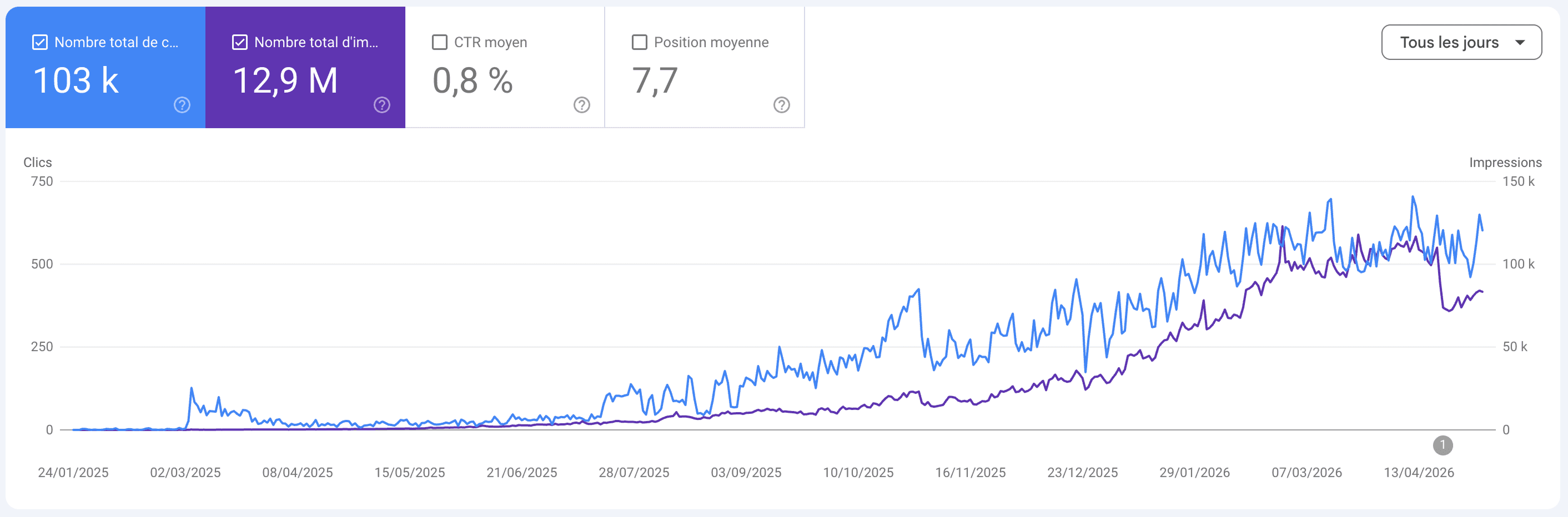

“I tripled my clicks on this site in 3 months.”
Timothée Tabary · Manager, e-commerce stores
🧰 Semrush AI Visibility Toolkit: the easiest yes if you already pay Semrush
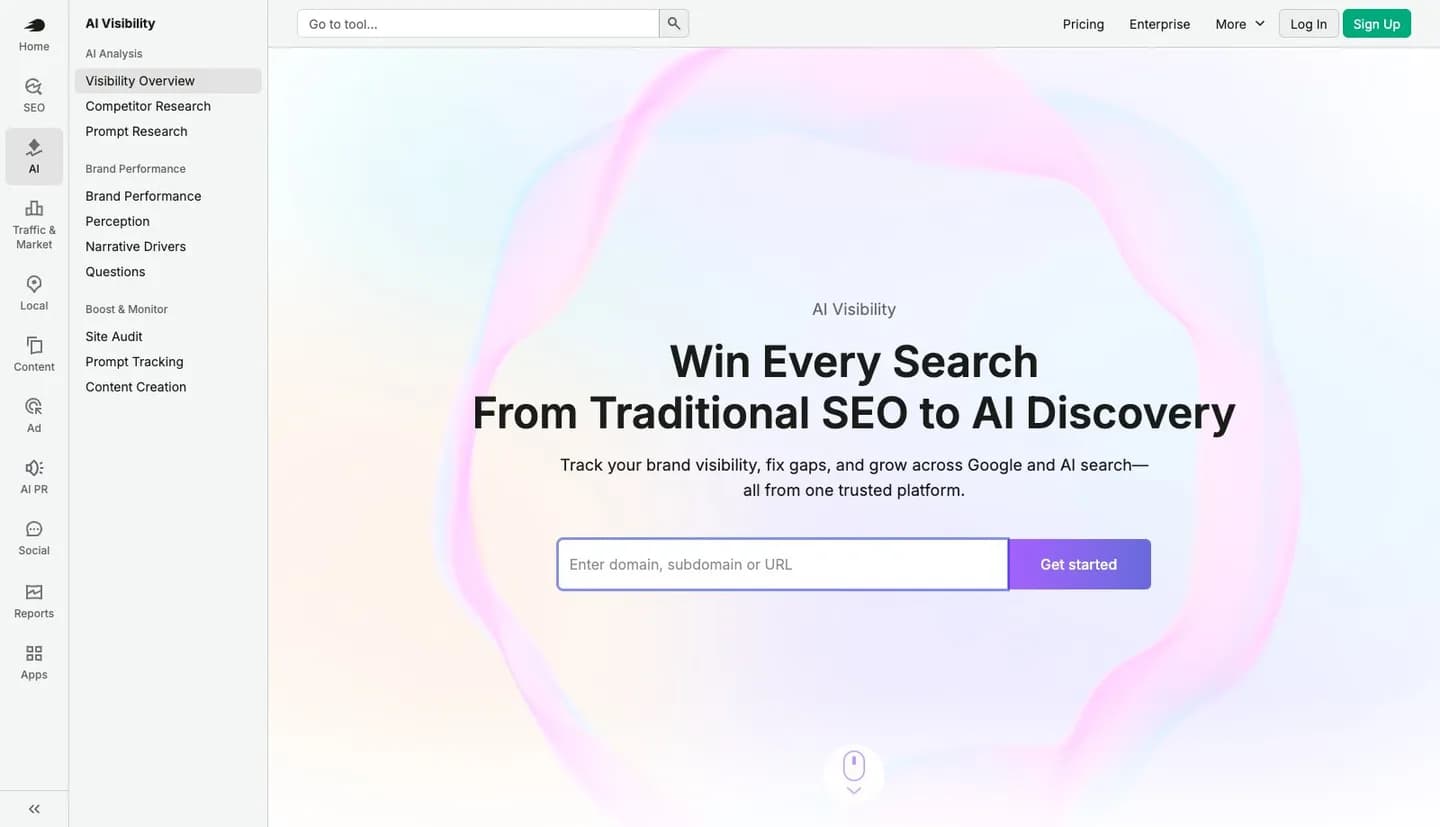
If Semrush is already on your invoice, this is the shortest path to an ai visibility tracker that lives next to your keyword data. The AI Visibility Toolkit Base is $99/month billed monthly for one domain, with 25 tracked prompts, 300 daily AI Analysis queries and 1,000 daily Prompt Research queries. The honest trade-off is prompt volume: 25 prompts is a pilot, not a programme, and extra prompts cost $60/month for 50 more. Move up to the SEO + AI Search plans and you get 50 or 100 prompts a day, with the entry plan at $199/month monthly or $165.17/month billed annually.
Pricing check: $99/month for the Base toolkit (Semrush knowledge base), with SEO + AI Search plans on semrush.com/pricing. A 7 day free trial is offered.
Pros
- AI data sitting beside your classic SEO reporting.
- Gemini, ChatGPT, Perplexity and AI Overviews coverage out of the box.
- 7 day trial, and a free plan with one demo project.
Cons
- 25 prompts is thin at entry level.
- Extra prompt packs add up fast.
- The AI module works best as part of a larger subscription.
Best for: agencies and in-house teams already standardised on Semrush.
Who should NOT buy it: anyone who wants a standalone cheap tracker, or teams that need 100+ prompts from day one without paying for a full SEO suite.

The AI that already knows your site
ChatSEO connects to your Search Console and tells you what to do next.
🔗 Ahrefs Brand Radar: AI data glued to your link stack
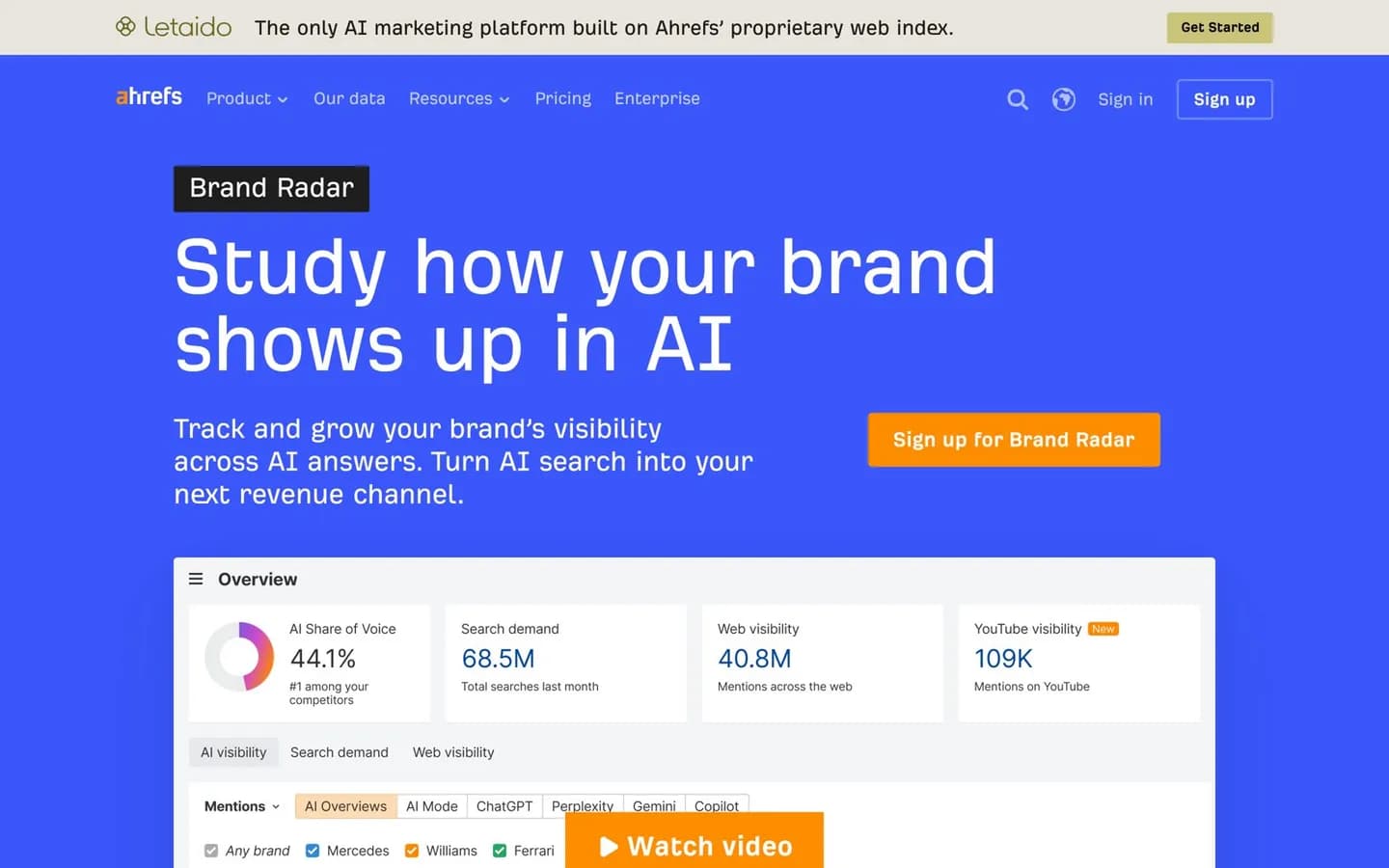
Brand Radar is the least romantic option here and the most convenient for one specific crowd: people who already open Ahrefs every morning. The standalone entry is $199/month billed monthly, and the Lite plan at $129/month billed monthly bundles 150 AI prompt checks and 5 tracked prompts. If you only need occasional checks, the custom prompt packages are the smarter buy: $50/month for 2,500 checks, $100/month for 7,000, $250/month for 25,000. Coverage is ChatGPT, Perplexity, AI Overviews, Copilot and Claude.
Pricing check: $199/month standalone, Lite $129/month, both billed monthly, on ahrefs.com/pricing. No free trial, no discounts, and the free Ahrefs tier is not a Brand Radar replacement.
Pros
- AI mentions sitting next to backlinks and SERP history.
- Cheap per-check packages for low-frequency monitoring.
- Reliable data infrastructure behind it.
Cons
- 5 tracked prompts on Lite is very low.
- No free trial.
- Prompt tracking is secondary to the rest of the suite.
Best for: SEOs who want AI numbers without adding another login. If you are still choosing a suite, read Semrush vs Ahrefs.
Who should NOT buy it: teams whose main need is prompt monitoring at scale. Promptwatch or LLMrefs will cost less.
🆓 AthenaHQ: the free tier that actually tracks something
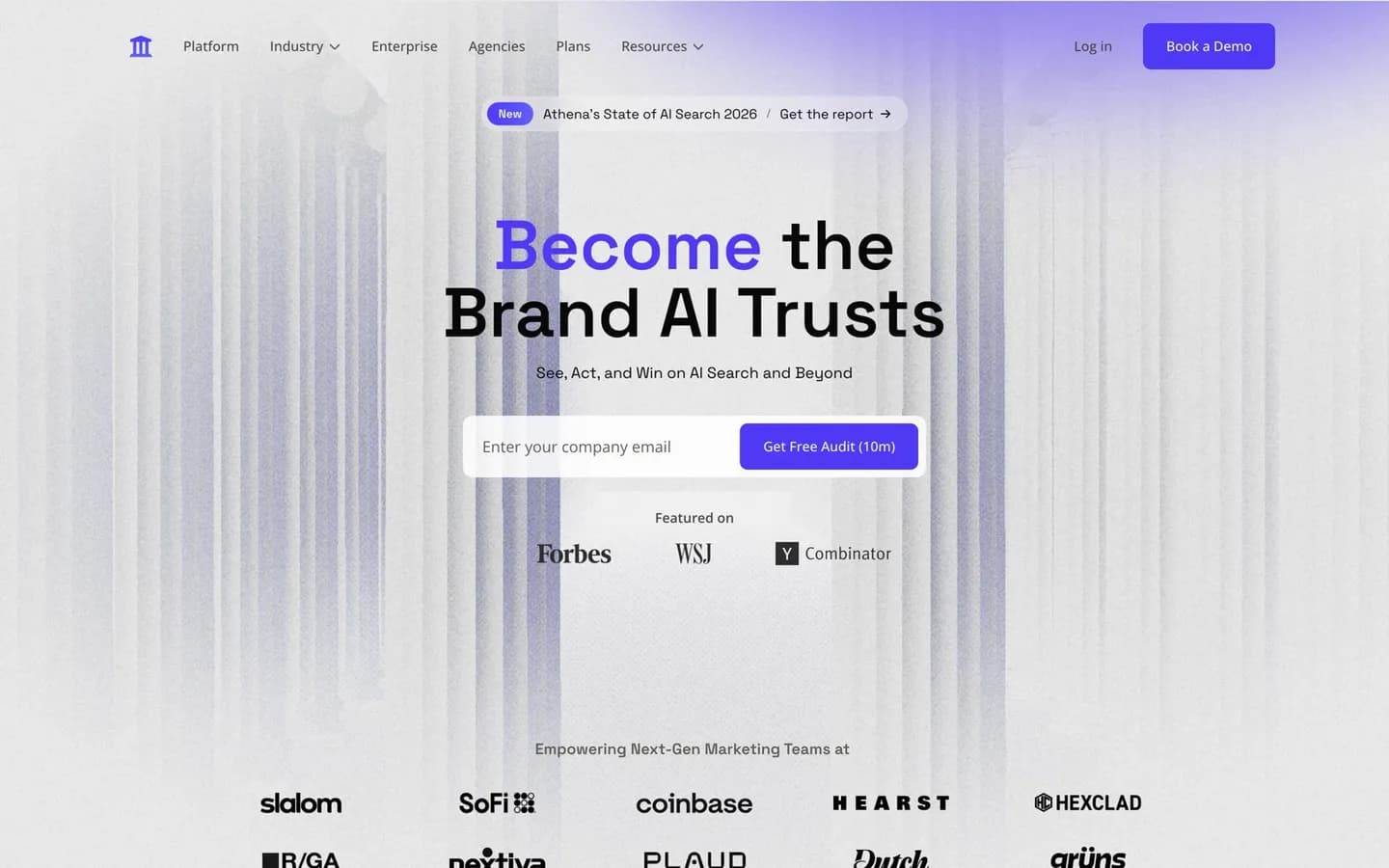
AthenaHQ wins the cheapest start in this comparison, and it is a real one. Essential is free with $25 of credit (300 credits), 5 models and unlimited users, so you can watch your brand in AI answers before you spend anything. Paid tracking starts at $295/month billed monthly for Starter, which gives 3,600 credits, unlimited topics, prompts and competitors, and 11 models. Annual billing takes 17% off, and extra credits or API access are paid add-ons.
Pricing check: free tier with $25 credit, Starter $295/month billed monthly (athenahq.ai/pricing).
Pros
- Genuine free tier, no card needed to start.
- 11 models on Starter, the widest included list in this list.
- Unlimited topics, prompts and competitors on the paid plan.
Cons
- The jump from free to $295/month is a cliff.
- Credits, not prompts, make cost forecasting harder.
- Add-ons for extra credits and API access.
Best for: startups that want to prove the channel works before committing budget.
Who should NOT buy it: small teams with steady but modest needs. 300 credits will not go far for long.
💸 LLMrefs: the most coverage per dollar here
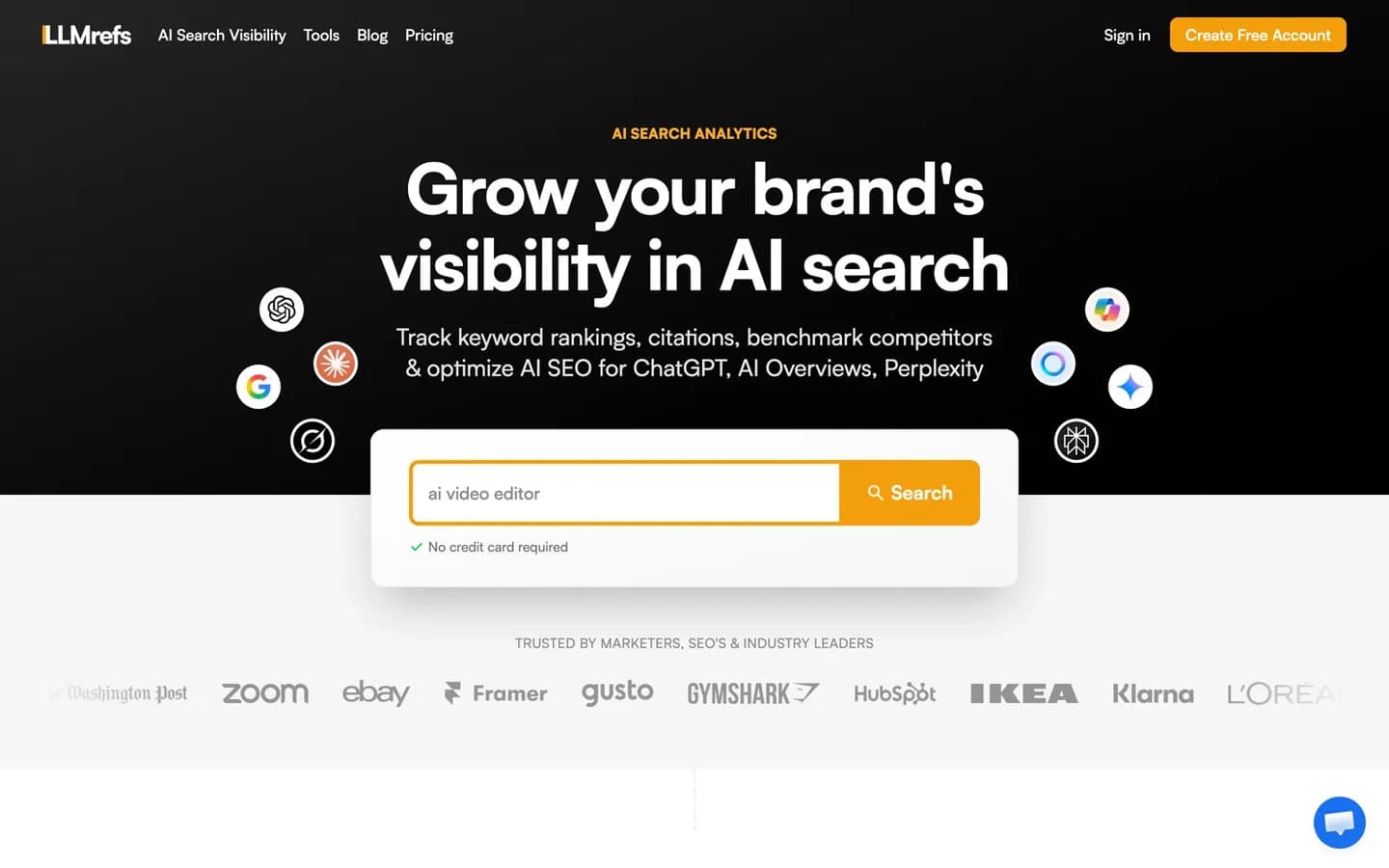
LLMrefs is the value play, and the numbers are not subtle. All in One is $79/month billed monthly for 500 prompts, all AI search engines, unlimited projects and unlimited seats. That is 20 times the prompt volume of Semrush's $99 Base toolkit for less money, which is why it takes the top pricing score in this list. Coverage includes ChatGPT, ChatGPT Search, AI Overviews, AI Mode, Gemini, Perplexity, Claude, Grok, Copilot, Meta and DeepSeek, refreshed weekly across 50+ countries and 20+ languages. The 7 day trial needs no card.
Pricing check: $79/month billed monthly, marked as limited time pricing on llmrefs.com/pricing.
Pros
- 500 prompts and 11 engines at the lowest price here.
- Unlimited projects and seats, so agencies can resell the work.
- 7 day trial with no card.
- Weekly refresh across 50+ countries.
Cons
- Weakest action layer: it reports, it does not tell you what to rewrite.
- "Limited time" pricing means your renewal may differ.
- Brand is younger than Semrush or Ahrefs.
Best for: agencies and lean teams that need breadth without budget.
Who should NOT buy it: teams that want a tool to hand them a prioritised fix list.
🔬 How we tested
No theatre here. We fetched 12 vendor pricing pages in October 2026: the seven tools above plus five we dropped. Ten loaded with prices. Otterly.ai returned HTTP 403 on both attempts, which is why its price is flagged as unconfirmed rather than estimated. We recorded plan names, monthly and annual prices, prompt or credit limits, included engine lists, and free trial status.
We then scored four criteria out of five stars. Tracking depth covers prompt volume and refresh cadence. Platform coverage rewards engines included in the price rather than sold as add-ons. Pricing value is entry cost divided by tracked prompts. Actionability asks whether the report gets you from insight to a fix. We did not run a 90 day monitored benchmark, and we will not pretend otherwise: the scores reflect published plan data, not trials of each tool. Two limits to keep in mind: some vendors show euro prices to European visitors, so we used their US dollar pages and their own documentation, and no vendor gave us a briefed demo.
❓ FAQ
What is an ai visibility tool?
An ai visibility tool monitors how often your brand appears in AI-generated answers, on platforms like ChatGPT, Gemini, Perplexity and Google AI Overviews. It tracks prompts rather than keywords, then reports mentions, position, sentiment and which sources got cited. That last part matters most: citations are where you can actually act.
Which ai visibility tool is best for a small budget?
LLMrefs at $79/month billed monthly gives you 500 prompts and 11 engines, which is the best coverage per dollar in this comparison. If you want to spend nothing first, AthenaHQ's free tier with $25 of credit and Otterly's low entry point are the two places to start. Both let you test the workflow before you commit.
Do I need an ai overview tracker if I already use Search Console?
Search Console shows clicks and impressions from Google, not your share of AI answers. An ai overview tracker adds the prompt-level view that Search Console cannot: which questions you appear in, who gets cited, and who wins the answer you lose. Use both. GSC tells you what happened on your site, an AI tracker tells you what happened off it.
How many AI platforms should my tracker cover?
Start with the four that carry real referral volume: Google AI Overviews, ChatGPT, Perplexity and Copilot. Coverage beyond those is a tie-breaker, not a reason to pay more: Gemini, Claude and AI Mode matter if your audience is technical, and DeepSeek or Grok rarely justify the upgrade on their own. Check whether each engine is included or an add-on.
Are AI visibility tracker prices billed monthly or annually?
Most vendors bill monthly by default, with 15% to 17% off for annual commitment. Peec AI discounts 15% annually, AthenaHQ 17%, and Semrush up to 17%, while Ahrefs publishes monthly prices with a similar annual saving. Annual is only safe once a monthly cycle has proven you will keep the prompt list.
Can I track AI visibility for free?
Yes, at small scale. AthenaHQ gives $25 of credit (300 credits, 5 models), LLMrefs and Semrush both offer 7 day trials, and Semrush's free plan includes one demo project. Free tiers are good enough to answer one question: does my brand show up at all in the prompts I care about? They are not enough to track 100 prompts for a quarter.
🏁 The verdict: pick by prompt volume, not by demo polish
Here is the short version. If breadth per dollar is the goal, LLMrefs at $79/month is the obvious first buy; if depth and reporting quality matter more and you can survive procurement, Profound is the one to shortlist. Between them sit Peec AI for teams, Semrush and Ahrefs for people who refuse to add another login, AthenaHQ for a free start, and Otterly for a cheap pulse we could not price at source.
The mistake to avoid is buying on a demo. Pick the tool whose entry plan covers the prompts you actually care about, run it for 30 days, and judge it on one thing: how many of the gaps it surfaced did you close? A tracker that shows you 500 prompts you never fix is worth less than a cheap one that shows 25 you do.
🤖 Where ChatSEO fits (not ranked, not scored)
One honest note, because we built ChatSEO and we are not scoring it here. ChatSEO does not track AI visibility over time, so it is not an ai search visibility tool and it does not belong in the ranking above. What it does is act on the gaps the tools in this list find: it connects to Google Search Console, reads your real performance data, and turns it into a prioritised plan, a GEO playbook and a content rework queue. Run a tracker, find the prompts you are losing, then use the data you already own to fix the pages behind them. For the tools that do the fixing, see our best AI SEO tools. Tracking is half the job. The other half is the rewrite nobody schedules.